THREE:This all-important question was adjourned to the next day, the 8th of June, when it was debated in a committee of the whole House. As the discussion, however, took place with closed doors, as all great debates of Congress did, to hide the real state of opinion, and to give to the ultimate decision an air of unanimity, the reports of it are meagre and unsatisfactory. We know, however, that Lee, the original mover, was supported by his colleague Wythe, and most energetically by John Adams; that it was as vigorously opposed by John Dickinson and his colleagues, Wilson, of Pennsylvania, Robert Livingstone, of New York, and John Rutledge, of South Carolina. Moreover, a considerable number of members from different States opposed the motion, on the ground, not of its being improper in itself, but, as yet, premature. Six colonies declared for it, including Virginia. Pennsylvania, New Jersey, and Maryland were at present against it. New York, Delaware, and South Carolina, were not decided to move yet; and it was proposed to give them time to make up their minds. Dr. Zubly, of Georgia, protested against it, and quitted the Congress. To give time for greater unanimity, the subject was postponed till the 1st of July; but, meanwhile, a committee was appointed to draw up a Declaration of Independence. The members of this committee were only five, namely, Thomas Jefferson, of Virginia; John Adams, of Massachusetts; Roger Sherman, of Connecticut; Richard R. Livingstone, of New York; and Benjamin Franklin, of Pennsylvania.
FORE:The king's speech, at the opening of this Session, recommended a consideration of the trade and general condition of Ireland; and indeed it was time, for the concessions which had been made by the Rockingham Ministry had only created a momentary tranquillity. The Volunteers retaining their arms in their hands after the close of the American war, were evidently bent on imitating the proceedings of the Americans, and the direction of the movement passed from Grattan to Flood. In September, 1785, delegates from all the Volunteer corps in Ireland met at Dungannon, representing one hundred thousand men, who passed resolutions declaring their independence of the legislature of Great Britain. The delegates at Dungannon claimed the right to reform the national Parliament, and appointed a Convention to meet in Dublin in the month of November, consisting of delegates from the whole Volunteer army in Ireland. Accordingly, on the 10th of November, the great Convention met in Dublin, and held their meetings in the Royal Exchange. They demanded a thorough remodelling of the Irish Constitution. They declared that as matters stood the Irish House of Commons was wholly independent of the people; that its term of duration was equally unconstitutional; and they passed zealous votes of thanks to their friends in England. These friends were the ultra-Reformers of England, who had freely tendered the Irish Reformers their advice and sympathy. The Irish people were ready to hail the delegates as their true Parliament, and the regular Parliament as pretenders. Within Parliament House itself the most violent contentions were exhibited between the partisans of the Volunteer Parliament and the more orthodox reformers. Henry Flood was the prominent advocate of the extreme movement, and Grattan, who regarded this agitation as certain to end only in fresh coercion, instead of augmented liberty for Ireland, vehemently opposed it.When he entered Portugal Massena issued a proclamation, informing the Portuguese that the British were the troublers and mischief-makers of Europe, and that they were there only for their own objects of ambition, and calling on the inhabitants to receive the French as their friends and saviours. Lord Wellington issued a counter-proclamation, remarking that the Portuguese had had too much occasion to learn what sort of friends the French were; that they had learned it by the robbery of their property, their brutality towards the women, and oppression of all classes. He called on them, as the sole means of rescue, to resist to the death; and he ordered them, as the British army retired from Lisbon, to withdraw from their towns and villages, carrying whatever they could with them, so that the enemy might find no means of support. This was part of his great plan; and he assured the Portuguese that those who stayed behind after their magistrates had ordered them to withdraw should receive no assistance from him; and that whoever was found holding any communication with the enemy should be deemed a traitor, and treated accordingly.
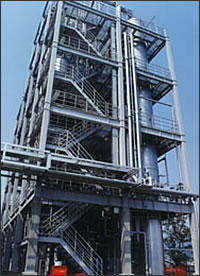
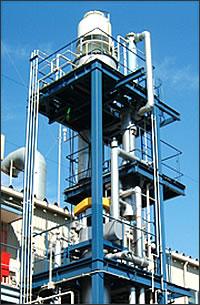
Methanol refinement systems, amyl alcohol refinement systems, ethanol refinement systems, hexanol distillation systems, propanol refinement systems, cyclohexanol distillation systems, isopropanol dehydration systems, ethylene glycol recovery systems, and butanol distillation systems.
FORE:GEORGE II. AT DETTINGEN, 1743.
Hexane distillation systems, tall oil distillation systems, benzene distillation systems, lubricating oil refinement systems, xylene-free distillation systems, low-boiling gas distillation systems, ethylbenzene recovery systems, fusel oil distillation systems, naphthalene distillation systems, propylene recovery systems, and turpentine oil distillation systems.
FORE:Whilst the Opposition was in the dejection of disappointed hopes, suddenly there arose an explosion of popular opinion against the Catholics, stimulated and led on by an insane fanatic, which threatened the most direful consequences, and produced sufficiently frightful ones¡ªthe so-called Gordon Riots.THE CONGRESS OF VIENNA.
Ether distillation systems, camphor distillation systems, epichlorohydrin distillation systems, aniline distillation systems, dioxane refinement systems, acetonitrile distillation systems, furfural refinement systems, formalin distillation systems, cyclohexane distillation systems, monoethanolamine rectification systems, polyglycol ether distillation systems, dimethylformamide recovery systems, acrylic glycol ether distillation systems, acrylonitrile refinement systems, acetone recovery systems, pyridine distillation systems, methyl ethyl ketone recovery systems, picoline distillation systems, methyl isobutyl ketone recovery systems, and acetaldehyde recovery systems.